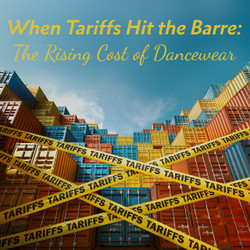
When Tariffs Hit the Barre: The Rising Cost of Dancewear
Posted by Angel P. on 27th Jan 2026
As a small dance retailer, our goal has always been simple: to make high-quality dancewear accessible to every dancer—from their very first class to their most important performance. But, in recent years, that goal has become increasingly difficult to achieve, and not because of a lack of care, effort, or commitment.
One of the biggest—and least visible—challenges facing small businesses today is tariffs on imported goods. In the dance world, the impact is especially significant because many essential items—like pointe shoes, tights, leotards, and specialty footwear—are manufactured internationally.
Why So Much Dancewear Is Made Internationally
Dancewear isn’t mass-produced fashion. Many of the products dancers rely on require specialized materials, technical construction, and skilled craftsmanship.
Pointe shoes, for example, are often handcrafted using traditional techniques that exist primarily in specific regions of the world. High-quality tights and performance fabrics are engineered for stretch, durability, and breathability—qualities that can’t easily be replicated through domestic mass production.
Because of this, dance retailers rely heavily on international manufacturers. When tariffs are imposed on these imports, the additional cost doesn’t stop at the border—it follows the product all the way to the retail shelf.
When the “Most Affordable” Becomes the Most Expensive
In many cases, items that were once considered entry-level or budget-friendly have seen dramatic wholesale price increases due to tariffs and rising import costs. Products that used to anchor the lowest price point in our store now cost significantly more before they even arrive.
This creates a difficult reality:
If the wholesale cost rises sharply, the retail price must rise as well—or the product can no longer be carried responsibly.
What makes this especially frustrating is that the product itself hasn’t changed. The quality, design, and function may be exactly the same—but external costs have pushed it into a higher price category.
The Hardest Part: Explaining the Invisible Costs
Tariffs aren’t something customers see clearly. There’s no price tag that explains international trade policy, supply chain shifts, or import fees.
From the outside, it can look like:
- A store is pushing customers toward more expensive items
- A small business is increasing profit margins
- Affordable basics are being intentionally removed
In reality, small businesses often absorb as much of the cost as possible—sometimes at the expense of their own margins—until doing so is no longer sustainable.
Why We Sometimes Have to Let Products Go
When a once-affordable staple becomes too expensive at wholesale, we’re faced with difficult choices:
- Raise the retail price beyond what feels reasonable
- Carry the item at a loss (which isn’t sustainable)
- Or discontinue it and search for alternatives
Letting go of a trusted, familiar product is never easy—especially when dancers and families have relied on it for years. But sustainability matters, both for the business and for the ability to continue serving our dance community long-term.
What This Means for Dancers and Families
We understand that dance is already a financial commitment. Rising costs—especially on essentials like tights and shoes—can feel frustrating, confusing, and discouraging.
Please know this: price changes aren’t about asking dancers to spend more. They’re about adapting to a supply chain that has fundamentally shifted, often in ways beyond a small retailer’s control.
Our commitment remains the same:
- Offering the best value possible at every price point
- Being transparent about why changes happen
- Continually searching for quality alternatives that balance cost, durability, and performance
Why Supporting Small Dance Retailers Matters
Tariffs and rising import costs affect small, specialized retailers far more than large corporations. Independent dance stores provide services that can’t be replaced by big-box or online-only shopping—expert fittings, personalized recommendations, and dancer-specific knowledge.
When you shop local, you’re supporting businesses that advocate for dancers, educate customers, and make thoughtful decisions about what goes on the shelf.
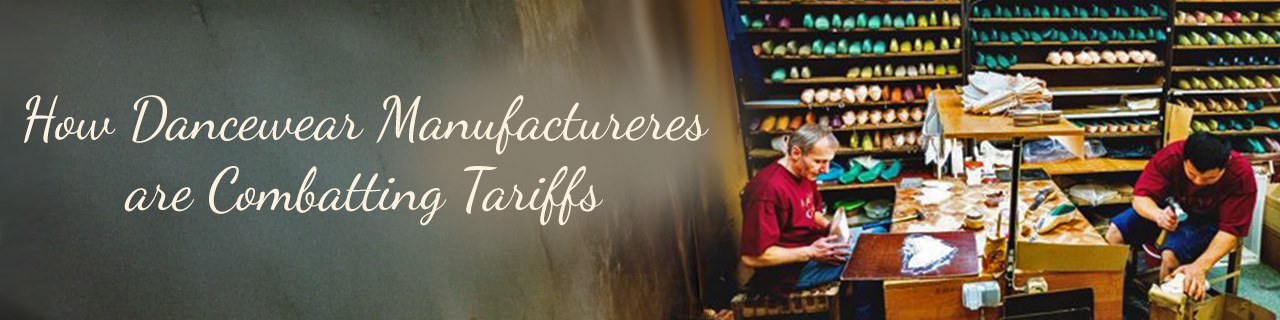
How Dancewear Manufacturers are Combatting Tariffs
Dancewear suppliers are aware of the difficulties and are also striving to find solutions to keep prices reasonable for our customers. Manufacturers’ ability to pivot depends on the size of the company. Some larger dancewear brands have moved manufacturing operations to different countries and continents, attempting to keep their prices more reasonable for consumers, but it is especially difficult for smaller boutique brands to adapt manufacturing practices under current conditions.
A few brands like Eurotard offer high-quality products crafted in the USA, eliminating import tariffs and keeping prices affordable for dancers and their families.
How Customers Can Help
Understanding and communication go a long way during times of rising costs. Here are a few ways dancers and families can help support small businesses:
- Ask questions. We’re always happy to explain price changes or product availability. Transparency matters to us.
- Stay open to alternatives. When a longtime favorite is discontinued, we carefully select replacements that offer the best balance of quality and value.
- Remember that small businesses don’t control tariffs. Price increases are rarely about profit—they’re about survival.
- Support local when you can. Shopping small helps keep knowledgeable fitters and dancer-focused care available in your community.
Final Thoughts
Rising import costs and tariffs have reshaped the dancewear landscape in ways that aren’t always visible—but their impact is real. As a small dance retailer, we’re committed to navigating these challenges thoughtfully, honestly, and with dancers’ best interests at heart.
Thank you for trusting us, supporting small businesses, and standing with us as we adapt to a changing industry—together.