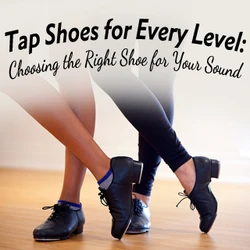
Tap Shoes for Every Level: Choosing the Right Shoe for Your Sound
Posted by Angel P. on 11th Jun 2026
Tap shoes are not one-size-fits-all. As a dancer progresses, their shoes must keep up—not just with footwork, but with sound quality, durability, and support. Whether you’re just starting out, refining technique, or performing at a professional level, choosing the right tap shoe can dramatically impact how you move and how you sound.
Understanding the differences between beginner, intermediate, and professional tap shoes helps ensure you’re investing in footwear that supports your training instead of holding it back.
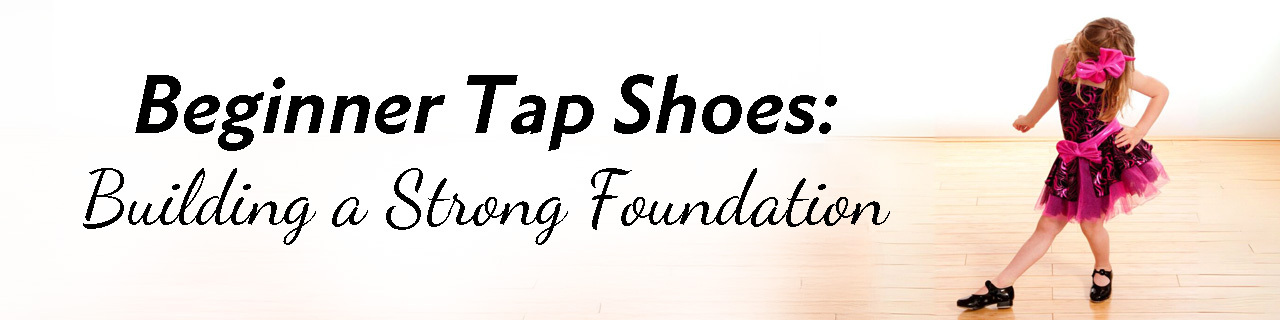
Beginner Tap Shoes: Building a Strong Foundation
Beginner tap shoes are designed with comfort, stability, and affordability in mind. These shoes help new dancers develop basic technique while offering enough structure to support growing feet and developing coordination.
Beginner shoes typically feature a full sole for added stability, a lower heel (around one inch), and lightweight taps that are often riveted rather than screwed. Because the taps are fixed, they cannot be adjusted for sound—but that simplicity is intentional at this stage.
These shoes are best for dancers in their first one to two years of training, young students, or anyone trying tap for the first time. Oxford-style lace-ups are highly recommended because they provide better ankle support, while Mary Janes are commonly used for young children due to easy Velcro closures.
Popular beginner models include the Mary Janes and Oxfords.
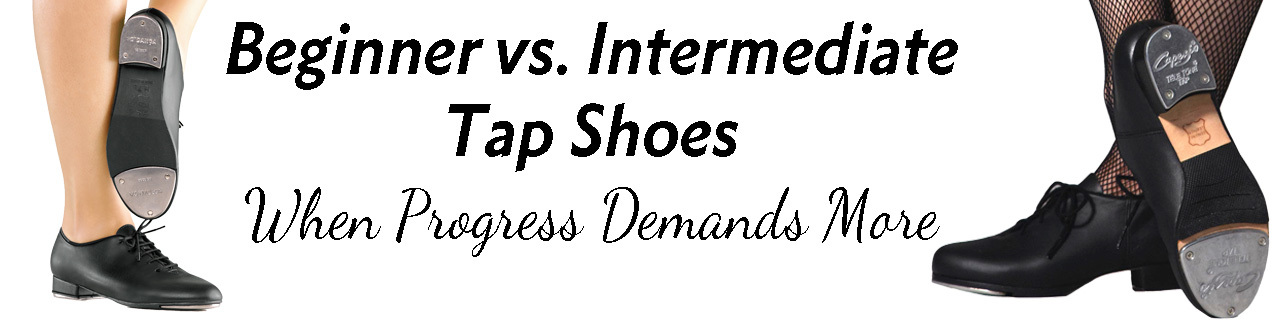
Beginner vs. Intermediate Tap Shoes: When Progress Demands More
As dancers advance, they begin to notice when their shoes can’t keep up with their sound or speed. This is where intermediate tap shoes come in.
The biggest difference is sound quality. Intermediate shoes use screwed-on taps, allowing dancers to adjust and fine-tune their sound. These taps produce a clearer, louder tone compared to the lighter, fixed taps found on beginner shoes.
Sole construction also changes. While beginner shoes usually have a rigid plastic full sole, intermediate shoes are constructed of a durable leather sole that breaks in over time, molding to your foot and creating greater articulation and control.
Materials are higher quality, which increases comfort and longevity for dancers attending multiple classes per week. Price points reflect this jump, with beginner shoes typically ranging from $40–$45 and intermediate/advanced shoes starting closer to $50–$100.
If you’re training consistently, taking multiple classes weekly, or feel like your sound isn’t cutting through the music, it’s likely time to upgrade.
Oxford tap shoes are available in styles suited for beginning/intermediate training and in more structured full grain leather options for intermediate/advanced dancers.
Intermediate vs. Professional Tap Shoes: Precision, Power, and Performance
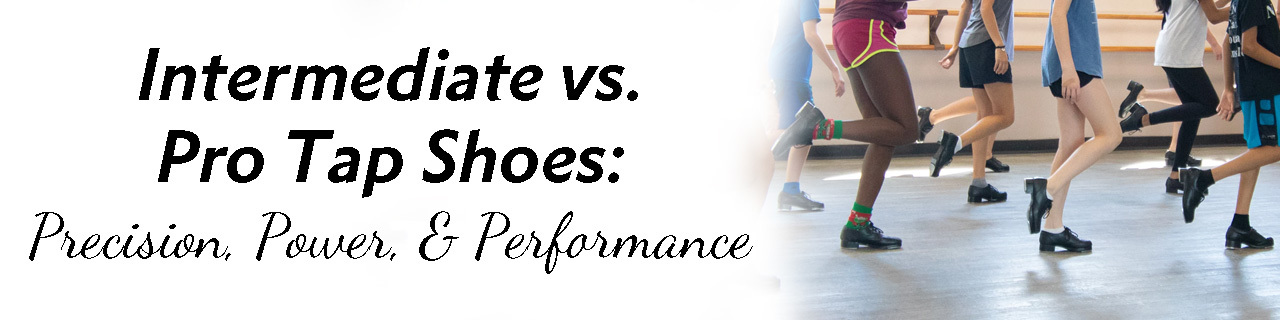
Intermediate tap shoes are designed for dancers refining technique, while professional tap shoes are built for performance, durability, and superior sound. The difference is noticeable the moment you step into them.
Professional tap shoes feature a “stacked” double-layered hard leather sole, which creates deeper resonance and a fuller, louder sound. These shoes are heavier and stiffer, requiring stronger feet—but they also provide better support for advanced techniques and long rehearsal hours.
Durability is another key distinction. Professional shoes are constructed to withstand daily use without taps loosening or the shoe breaking down prematurely. The stacked soles hold up to the rigors of toe stands, rhythm tap, and long hours of rehearsals.
Sound quality is where professional tap shoes truly shine. They offer richer tones and clearer articulation, ideal for fast footwork, complex rhythms, and performance settings.
Advanced and professional-level dancers—or those dancing multiple times per week—benefit most from this upgrade.
Professional Tap Shoe Spotlight: Capezio Roxy vs. Bloch Jason Samuels Smith
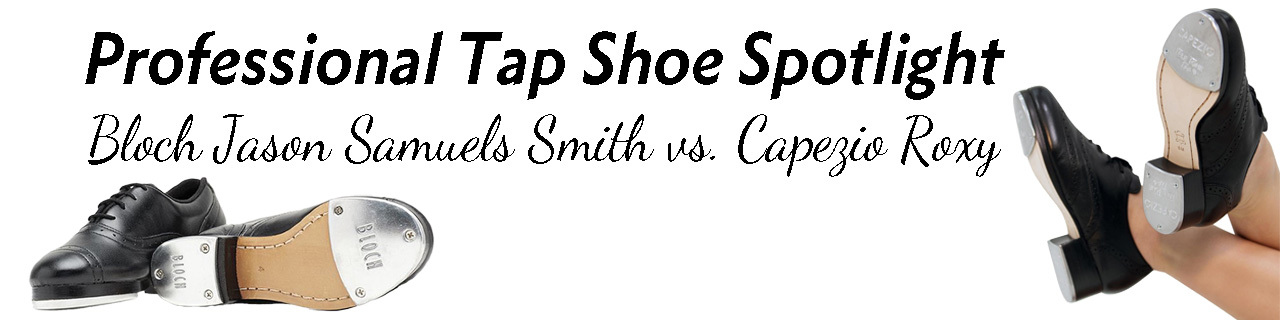
Two of the most popular professional tap shoes are the Capezio Roxy and the Bloch Jason Samuels Smith (JSS). While both are excellent, they cater to slightly different needs.
The Bloch JSS is known for its powerful, full-bodied sound and exceptional durability. It has a narrower fit through the metatarsal and often takes longer to break in, but many advanced tappers prefer it for fast, technical work. The heel is slightly higher, and dancers often size up.
The Capezio Roxy offers a wider toe box and softer leather, making it more comfortable straight out of the box. It’s often considered more forgiving for wider feet and is a popular choice for dancers seeking professional quality at a more accessible price point. Some dancers note a shallower heel cup, which may cause slight heel slipping for certain foot shapes.
Sound preference also plays a role. While the JSS is often praised for volume and depth, some dancers prefer the tone of Capezio’s Teletone taps.
In short, the JSS is favored for maximum sound and durability, while the Roxy excels in comfort and versatility at a more accessible price point.
But What About Split Sole and Heeled Tap Shoes?
Up to this point we’ve been discussing tap shoes for rhythm tap, one of the most popular tap styles, characterized by complex, syncopated, and often improvised, intricate footwork, with less focus on upper body movement.
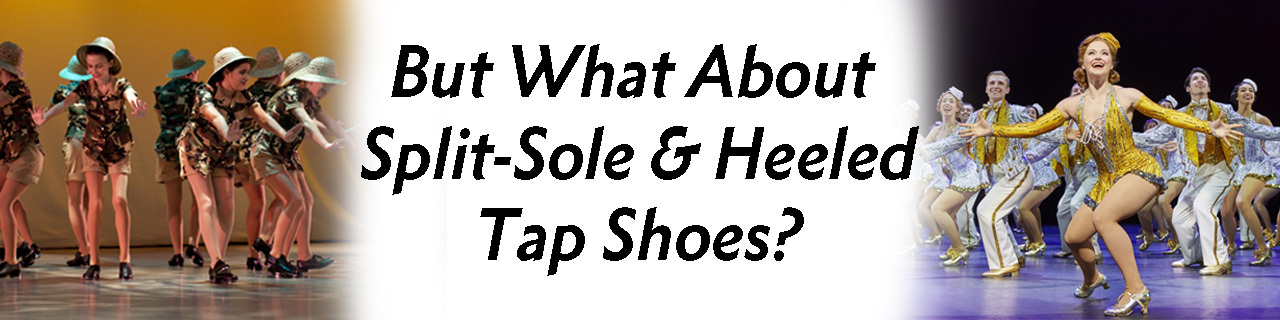
But there are a variety of tap styles including Broadway or theatre tap, typically featured in musical theatre shows (42nd Street, Anything Goes, Newsies, etc.). Theatre tap features large, expressive, and showy movements, frequently combining technical footwork with arm movements and theatrical flair. Competitive dancers also frequently perform tap pieces, and they sometimes use a blend of these two distinct styles.
Rhythm Tap Dancers prioritize sound quality, choosing oxford (lace up) style shoes that create strong clear sounds and offer a supportive fit.
Theatrical Tap Dancers typically learn to tap in stable oxford style shoes, then progress to heeled tap shoes. Heeled taps are less stable and create less sound, so they require intermediate or advanced techniques to use properly. But they sure do look great with certain costumes! Broadway performers and pre-professionals seeking high quality heeled taps typically choose a LaDuca tap shoe.
Competitive Tap Dancers sometimes choose split-sole tap shoes for the enhanced flexibility and foot articulation they provide. Split-sole tap shoes allow a dancer to fully arch and point their foot, creating the sleek lines that judges look for during a performance. But the lighter, more flexible design comes at the cost of sound volume and quality.
When Should You Upgrade Your Tap Shoes?
For young dancers with growing feet, theatre performers who need shoes for a single event, and casual tappers who don’t anticipate dancing more than a semester of classes, a reliable beginner shoe is the right place to begin.
For advanced younger dancers as well as beginning and intermediate adults who plan on tapping regularly an intermediate, durable leather tap shoe is ideal. It will hold up to the rigors of extended use and offers improved sound quality, all at a more reasonable price point.
For advanced dancers tapping multiple times per week and training seriously, or dancers who find their current shoes are limiting sound or speed, upgrading to a professional stacked tap shoe will make a noticeable difference.
Tap shoes are instruments. As your skill grows, your instrument should grow with you.
Final Thoughts
The right tap shoe supports your technique, enhances your sound, and keeps you dancing comfortably and confidently. Whether you’re building fundamentals or performing at a high level, understanding how tap shoes evolve with your training helps you make smarter, longer-lasting choices.
At the end of the day, great tap dancers don’t just move well—they sound incredible. And the right shoes help make that possible.